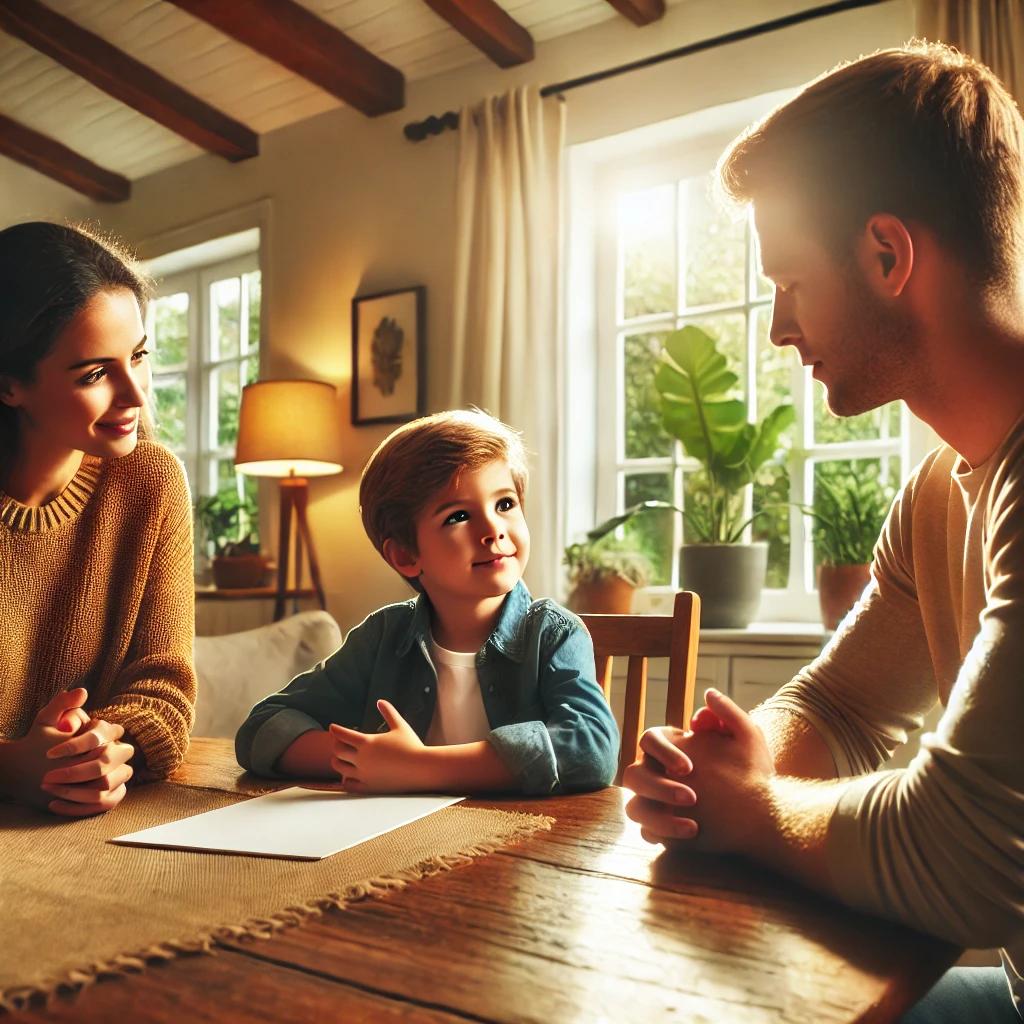

Your toddler may talk nonstop at home, sing their favorite songs, tell you what they want, and have plenty to say—until someone unfamiliar walks into the room. Suddenly, the words disappear. They might hide behind your legs, avoid answering questions, whisper, or communicate only by pointing. Then, after the visitor leaves, your chatty toddler seems to return.
If this happens regularly, you may wonder, “Why does my child stop talking around strangers when they clearly know how to talk?”
In many cases, the answer is not that your child has forgotten how to communicate. They may simply need more time to feel comfortable before they are ready to use their voice.
The good news is that there are several simple ways you can make these situations easier without pressuring your child to perform.
Why does my child go quiet?
Talking requires more than knowing words. A young child also needs to feel comfortable enough to use those words in a particular situation.
At home, your toddler knows the people around them and understands the routine. They know who will listen, how people respond, and what to expect.
A stranger introduces uncertainty.
Your child may be wondering:
- Who is this person?
- Are they going to talk to me?
- What do they want me to do?
- Should I answer?
- Is everyone watching me?
Some children respond to this uncertainty by becoming quiet and observing.
This is particularly common in children who are naturally cautious or slow to warm up. They may need to watch a new person for a while before deciding that it is safe and comfortable to interact.
Silence in a new situation can therefore be a child's way of taking time to adjust.
Don't rush the warm-up
One of the most helpful things you can do is remove the expectation that your child must immediately interact.
When a visitor arrives, it can be tempting to say:
“Go and say hello.”
“Tell them your name.”
“Why aren't you talking?”
Instead, allow your toddler to stay close to you and observe.
You might simply say:
“She needs a little time to warm up.”
Then let the interaction develop naturally.
Your child may initially watch from across the room. A few minutes later, they may move closer. Eventually, they might join the activity or begin talking.
That progression is perfectly useful communication in itself.
The goal is not to make your child talk faster. It is to help them feel comfortable enough that talking becomes easier.
Stop putting them on the spot
Adults often try to encourage shy toddlers by asking lots of questions.
“What is your name?” “How old are you?” “What did you do today?” “Can you show me your toy?” “What's that?” Although these questions are usually meant kindly, they can make an already cautious child feel as though they are being tested.
Try changing the interaction from questioning to commenting.
Instead of: “What are you building?” a visitor could say: “That tower is getting really tall.”
Instead of: “What toy is that?”They could say: “You've got a big red truck.”
This gives your child something to listen to without requiring an answer.
If they want to respond, they can.
If they do not, the conversation can continue without making their silence the center of attention.
Let our child use you as a safe base
You do not need to push your toddler toward unfamiliar people.
It is completely reasonable for them to stay beside you while someone new is present.
Your presence can give your child the confidence to gradually explore the situation.
For example, you might sit on the floor with your toddler while a visitor plays nearby. Your child can watch, continue playing with you, and eventually decide to join in.
This is often more effective than repeatedly encouraging them to “go talk.”
Once they feel secure, they may move toward the other person naturally.
Use play instead of conversation
For some toddlers, direct conversation feels difficult, while playing feels easy.
A new person does not necessarily need to sit down and start talking to your child.
They can:
- build blocks nearby;
- draw a picture;
- play with a toy;
- look at a picture book;
- roll a ball;
- or join an activity your child already enjoys.
Play gives your toddler something to focus on besides the unfamiliar person.
It also creates natural opportunities for communication.
Your child may first participate without speaking. Then they may make a sound, point, laugh, or eventually say something.
Follow the interaction rather than trying to force the speech.
Let familiarity do some of the work
If your child regularly becomes silent around the same person, repeated low-pressure contact can help.
For example, instead of expecting your toddler to talk to a relative during every visit, let that person become familiar through ordinary activities.
The first visit might involve nothing more than watching.
The next time, your child might play nearby.
Eventually, they may start responding to the person.
This gradual process can be much easier than expecting a child to become comfortable immediately.
It can also help if adults keep their approach consistent. A visitor who calmly gives your child space may become easier to approach than someone who repeatedly asks why they are not talking.
What should you say when someone comments?
Sometimes the pressure does not come from you or your child. It comes from another adult.
Enjoying this article?
Receive one research-backed parenting tip every Friday.
Someone might say:
“Why is she so quiet?”
“She was talking before we arrived.”
“Come on, say something!”
You can protect your child from becoming the focus of the conversation.
A simple response is enough:“She takes a little time to warm up.”Then redirect the conversation. You do not need to apologize for your child's behavior or repeatedly explain it.
This also sends an important message to your toddler: being quiet for a while is not something they need to feel embarrassed about.
Don't make speaking the price of participation
If your toddler wants to join an activity, let them participate even if they are not talking.
They can:
- point;
- nod;
- smile;
- hand someone a toy;
- imitate an action;
- or simply play alongside others.
Communication does not have to begin with a complete spoken sentence.
When children discover that they can participate without being forced to talk, they may become more relaxed—and speech may follow naturally.
Give them a little more time to answer
If someone asks your toddler a question, resist the urge to answer for them immediately.
Give them a few extra seconds.
They may need time to process the question, decide whether they want to answer, and gather the confidence to speak.
If they still do not respond, let it go.
You can answer naturally without saying:
“She knows that.”
“She can say it at home.”
“She just doesn't want to talk.”
Those comments can unintentionally increase the pressure.
What if they only talk to certain people?
It is useful to notice where your child does and does not speak.
Perhaps they talk freely with parents but not grandparents.
Perhaps they talk to one familiar caregiver but remain silent at preschool.
Perhaps they speak after ten minutes but not during the first few minutes.
These differences are worth observing because they show how strongly the environment affects your child's communication.
You do not need to analyze every interaction. Simply notice the pattern.
If the difference between familiar and unfamiliar situations is your main concern, keep watching how your child responds as familiarity increases.
If you have separate concerns about your child's overall speech or language development, that is a different question and is better explored separately in Toddler Speech and Language Development: Milestones, Delays, and When to Get Help.
When quietness deserves a closer look
Being quiet around strangers by itself does not tell you that your toddler has a speech or language problem.
The more important question is whether your child can communicate comfortably in familiar situations and whether the silence is limited to certain social circumstances.
If your toddler communicates well at home but becomes temporarily quiet with unfamiliar people, giving them time and reducing pressure may be all that is needed.
However, if your child rarely communicates even with familiar people, has difficulty expressing basic needs, or you have broader concerns about their communication, it is worth discussing those concerns with a qualified professional.
And if limited speech is becoming a source of frequent frustration, that is another issue worth exploring rather than simply assuming your child is shy. How to Help a Child Who Gets Frustrated Because They Can't Communicate looks specifically at that situation.
A simple approach for your next visit
The next time someone unfamiliar comes over, try this:
1. Don't announce that your child is shy.
Avoid making their silence the main topic.
2. Let them stay close to you.
Give them a secure place from which to observe.
3. Ask the visitor to slow down.
Encourage conversation around your child rather than direct questioning.
4. Start with an activity.
Books, blocks, drawing, or toys can make interaction feel more natural.
5. Accept nonverbal communication.
A wave, smile, point, or shared activity is still participation.
6. Wait.
Give your child time to decide when they are ready to join in.
7. Notice progress rather than performance.
Moving from hiding to watching, from watching to playing, and from playing to talking are all meaningful steps.
When your child finally talks
If your toddler eventually starts talking after spending time with someone new, try not to make a big deal about how long it took.
You do not need to say:
“See? I knew you could talk!”
Instead, simply respond to what they said.
If they show the visitor a toy, join the conversation.
If they answer a question, continue naturally.
If they suddenly start chatting away, let the conversation happen.
The aim is for your child to learn that talking with unfamiliar people is safe and ordinary—not a performance they must pass.
The Bottom Line
When a child stops talking around strangers, the solution is often not to push harder.
Give them time, familiarity, and low-pressure opportunities to interact.
Stay nearby. Let them observe. Replace rapid-fire questions with simple comments. Use play to create connection. Accept gestures and other forms of participation. Most importantly, avoid turning their silence into a problem they feel they need to solve in front of other people.
Some children simply need longer to warm up.
And sometimes, a child's quietness around strangers is only one small part of a larger communication pattern. If you notice other concerns, explore those separately rather than assuming everything is caused by shyness.
For now, remember one simple principle:
Your toddler does not have to talk immediately to be communicating successfully. Sometimes the first step toward talking is simply feeling safe enough to join in.